


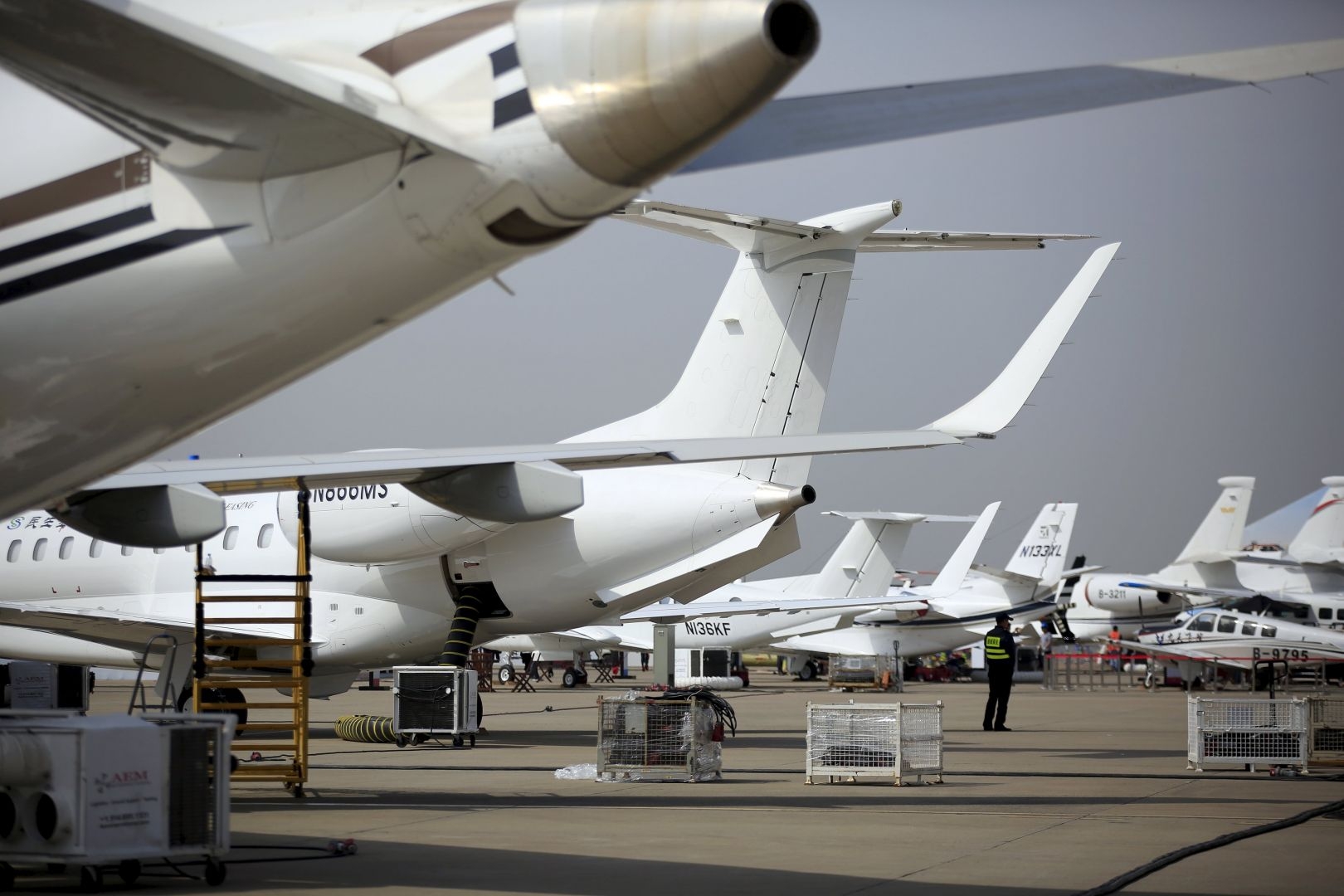
China will invest 77 billion yuan ($11.9 billion) this year in building aviation infrastructure, the official Xinhua news agency reported late on Wednesday, citing the country's civil aviation regulator.
The Civil Aviation Administration of China (CAAC) said the investment, which will focus on airports, will initially lead to 11 key construction projects and 52 aviation-related upgrades to existing facilities, Xinhua reported.
"The general aviation sector, especially aircraft research and manufacturing, has became a hot spot of both industrial upgrading and social concern," Feng Zhenglin, head of the CAAC, told the official news agency.
China's cabinet separately said late on Wednesday it would support the development of the country's aviation industry and opening up low-altitude air space, an issue that constrains a fledgling market for helicopters and small aircraft. It did not provide details.
"Opening up will especially benefit China's tourism, emergency medical services and pilot training sectors, which operate light aircraft and helicopters," said Greg Waldron, Asia Managing Editor at industry publication Flightglobal.
Civilian air traffic controllers handle low-altitude air space and work with the military to manage both civil and military traffic in most parts of the world.
China's military controls the country's air space, and its planes have priority over civil aircraft. Special military-only zones also force other aircraft to take a longer route.
Over the last few years, Beijing has relaxed some restrictions on flights below 1,000 m (3,280 ft) - although civil aircraft still need military approval to fly through some areas.
Industry observers expect the approval process to be further relaxed and the ceiling to increase to 3,000 m, in line with Western norms. Some, however, are cautions.
"I doubt they will let people get into their aircraft and fly off without approval like in Australia and the U.S. This is still China and there will still be restrictions," Waldron said.
The relaxation could boost demand for light aircraft. China had only 1,600 light aircraft and around 80 airports to handle them in 2013. It will need 10,000 light aircraft this decade to meet demand, according to some projections.
The U.S., by comparison, had about 300,000 GA aircraft and 24,000 airports for them in 2013.
Since 2000, Western firms like America's Cessna and Austria's Diamond Aircraft have set up joint ventures with Chinese partners to produce light aircraft in the country.
ALSIM has announced that MH Cockpit, based in India, has acquired an AL250 simulator—marking a significant step in MH Cockpit’s expansion plans and reinforcing its ambition to build a robu...
Embraer delivered the first Praetor 600E to Flexjet, marking the operator as the launch fleet customer for Embraer’s latest-generation super-midsize business jet. The inaugural aircraft joins Fl...
Confidence in Asia's business aviation market is on the rise, according to new research commissioned by Airbus Corporate Jets (ACJ). Industry experts expect demand for business aircraft to grow st...
ExecuJet MRO Services Australia successfully completed a major 20-year scheduled airframe inspection on an Indonesian-registered Embraer Legacy 600 at its Sydney facility, further demonstrating t...