



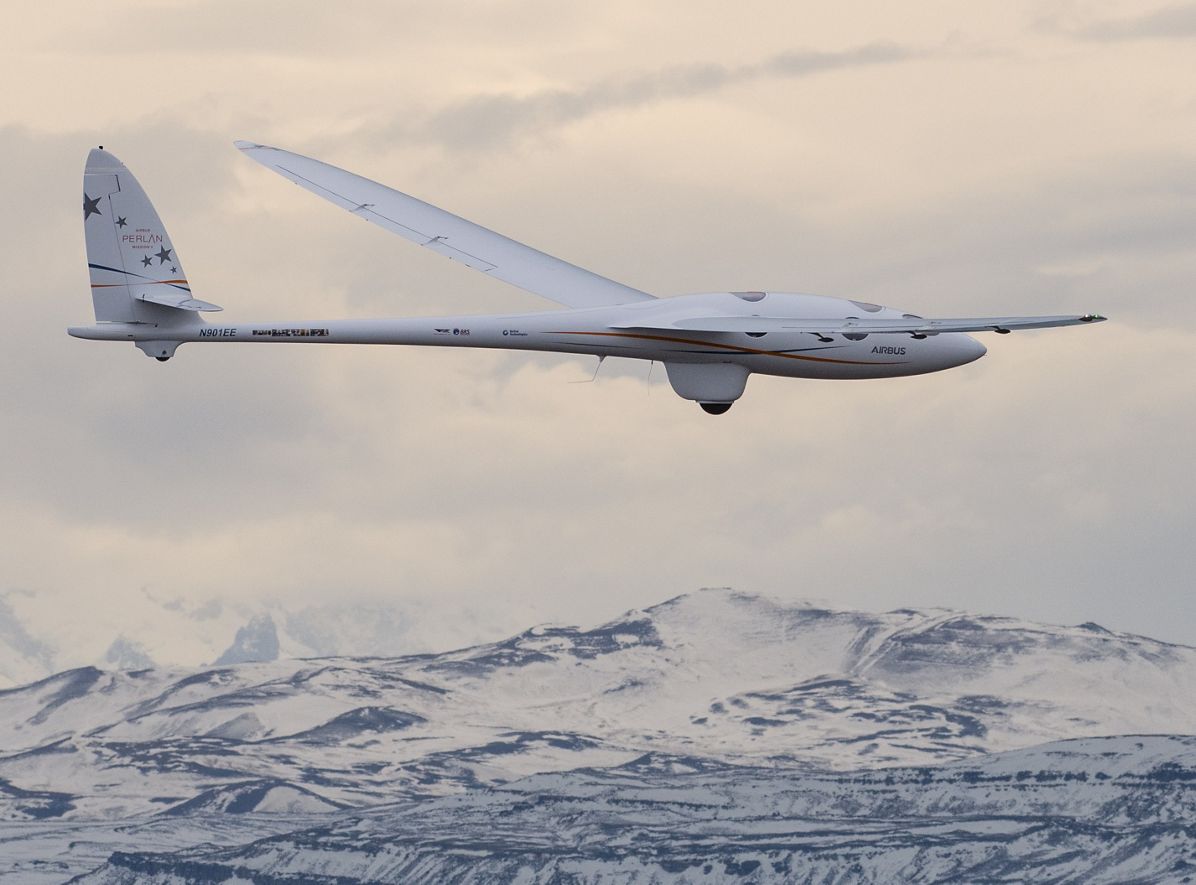
Airbus Perlan Mission II, the world’s first initiative to send an engineless aircraft to the edge of space, made history yesterday in the Patagonia region of Argentina by soaring to over 52,000 feet and setting a new world altitude record for gliding.
“We are celebrating an amazing victory for aerospace innovation and scientific discovery today, and we’re so thankful to all the volunteers and sponsors whose years of tireless dedication have made this achievement possible,” said Ed Warnock, CEO of The Perlan Project. “We will continue to strive for even higher altitudes, and to continue our scientific experiments to explore the mysteries of the stratosphere. We’ve made history, but the learning has just begun.”
“With every Airbus Perlan Mission II milestone, we continue to learn more about how we can fly higher, faster and cleaner. But we also learn that aviation still has the power to surprise us, thrill us, and motivate us to find new frontiers of endeavor,” said Tom Enders, Airbus CEO. "Perlan's outstanding aviation success is the result of bold thinking. It's this kind of thinking that is the cornerstone of our vision for the future of Airbus, which we hope will inspire a new generation of aerospace explorers and innovators."

Chief pilot Jim Payne and co-pilot Morgan Sandercock completed this historic Perlan 2 flight from Comandante Armando Tola International Airport in El Calafate, Argentina, surpassing the previous 50,727-foot world record for glider altitude that was set in the unpressurized Perlan 1 by The Perlan Project founder Einar Enevoldson and lead project sponsor Steve Fossett in 2006.
Airbus Perlan Mission II is an initiative to fly an engineless glider to the edge of space using weather phenomena called stratospheric mountain waves, rising air currents that are significantly heightened a few times a year in only a couple places on earth by the polar vortex. The area around El Calafate, nestled within the Andes Mountains in Argentina, is one of those rare locations where these rising air currents can reach the stratosphere.
Because of its engineless design, the Perlan 2 glider is a unique platform for scientific discovery, and is carrying aloft on every flight experiments ranging in focus from factors influencing climate change to radiation effects on pilots and aircraft at high altitudes.
Following the completion of the mountain-wave gliding season in Argentina, Airbus Perlan Mission II will return to Minden, Nevada, where the all-volunteer team will modify and enhance the Perlan 2 glider based on information acquired in this year‘s test flights. Ultimately, the Perlan Project will attempt to reach 90,000 feet, a world altitude record for any wing-supported flight, with or without an engine.
KlasJet has achieved a significant milestone by obtaining Part 129 Operations Specifications (OpSpecs) approval from the FAA, paving the way for the company's expansion into the U.S. market. As pa...
Embraer delivered the first Praetor 600E to Flexjet, marking the operator as the launch fleet customer for Embraer’s latest-generation super-midsize business jet. The inaugural aircraft joins Fl...
ExecuJet MRO Services Australia successfully completed a major 20-year scheduled airframe inspection on an Indonesian-registered Embraer Legacy 600 at its Sydney facility, further demonstrating t...
Air France was among the leading winners at the Skytrax World Airline Awards, held in London on September 18, 2026, earning multiple distinctions that highlight the excellence of its products and cust...