


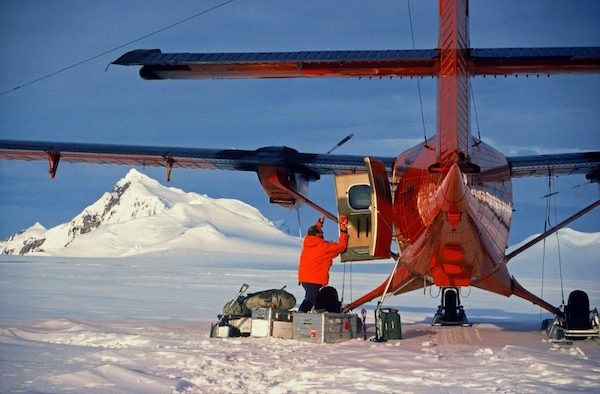
Centrik global expertise is supporting British Antarctic Survey with its polar research flight programme. Primarily flying four De Havilland Canada Twin Otters and a Dash 7 in the Antarctic – alongside additional research sorties in the Arctic, the Caribbean and Africa – BAS’s complex flight operations required a flexible, agile system capable of providing comprehensive operational management support anywhere in the world.
Rodney Arnold, Head of Air Unit at British Antarctic Survey, says: “To improve the efficiency of our operation, we wanted to replace our paper-based processes and existing aging platforms with a system capable of centralising our entire operation through a single point, one that could be accessed and updated from anywhere.”
Centrik’s modular architecture provides BAS with complete operational management control, including the ability to complete risk registers and safety reports, conduct and monitor all pilot training activity, carry out audits, issue and action findings, as well as initiate and track internal workflows, from anywhere. All relevant flight and operational documentation is also available within Centrik and accessible via tablet, saving valuable weight onboard.

“Centrik is intuitive and easy to use, it enables us to show evidence of our safety, compliance and training currency to regulators who are able to access the system and view what is happening within the organisation. When you factor in the type of work we do, where we operate, and how important it is to prove our approach to safety, this is an extremely powerful tool,” adds Arnold.
Through Centrik’s offline capabilities, BAS is also able to record, share, update and action all operational information via a tablet when out in the field. Once back online – and even factoring in the restricted bandwidth available at the Poles – the system’s automatic synchronisation will ensure that all operational data is complete and up-to-date for all users.
BAS’s Twin Otter fleet average around 2,500 hours a year, whilst the Dash 7 logs around 500 hours. Mostly working in the Antarctic between October and April, outside of those times BAS utilises its research experience across the globe.



Boeing and Malaysia Airlines have renewed their Integrated Materials Management (IMM) services agreement for five years, the companies announced at MRO Asia-Pacific in Singapore. The renewed partnersh...
Qantas has announced it will launch the first-ever non-stop commercial flights between Sydney and New York from mid-2028, marking a major milestone for its landmark Project Sunrise initiative. Ti...
Located alongside Dassault Aviation’s flagship manufacturing facility, Dassault Falcon Service Mérignac is celebrating a decade of dedicated support to Falcon operators around the world....
Air France was among the leading winners at the Skytrax World Airline Awards, held in London on September 18, 2026, earning multiple distinctions that highlight the excellence of its products and cust...