


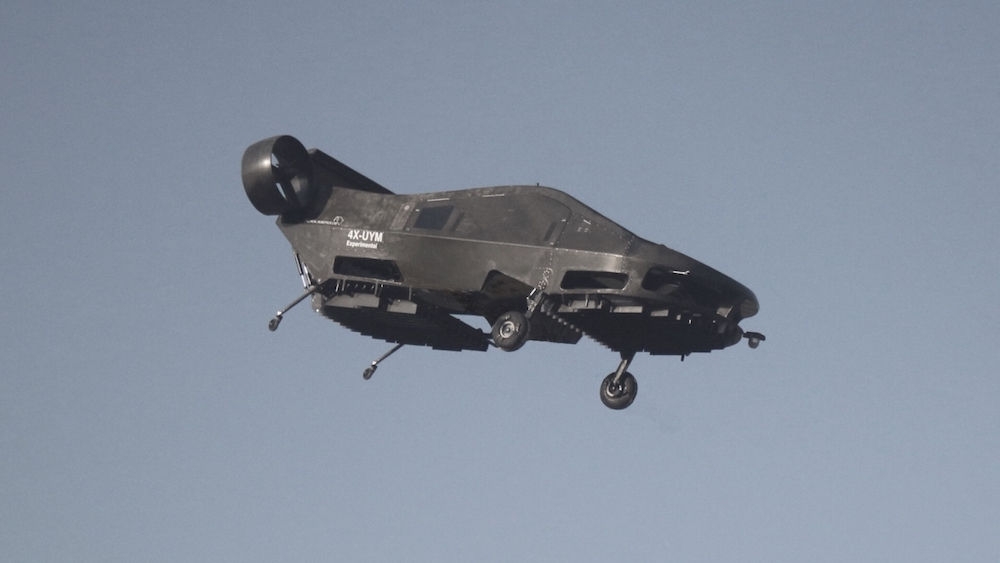
An autonomous flying ambulance has successfully completed its first solo test flight, offering a potential solution for challenging search and rescue missions. Completing such missions in rough terrain or combat zones can be tricky, with helicopters currently offering the best transportation option in most cases. However, these vehicles need clear areas to land, and in the case of war zones, helicopters tend to attract enemy fire.
Now an Israeli company has completed the test flight for an automated flying vehicle, dubbed the Cormorant, that could one day go where helicopters cannot. Last month, the company flew the Cormorant on the craft's first solo flight over real terrain. The vehicle is designed to eventually carry people or equipment without a human pilot on board, 'Live Science' reported.
Rather than using propellers or rotors to fly, the Cormorant uses ducted fans that are effectively shielded rotors, which means the aircraft does not need to worry about bumping into a wall and damaging the rotors. Another set of fans propels the vehicle forward. The vehicle is effectively a decision-making system that can figure out what to do if there is a problem in the inputs from the sensors, the company, Urban Aeronautics, said. If the Cormorant detects a potential issue, the drone's robotic brain can decide whether to go home, land and wait for more instructions, or try a different flight path.

RECARO Aircraft Seating is celebrating the 80th anniversary of Scandinavian Airlines with a unique collection of 80 customized RECARO Gaming Nxt chairs created exclusively for the carrier. Repres...
Confidence in Asia's business aviation market is on the rise, according to new research commissioned by Airbus Corporate Jets (ACJ). Industry experts expect demand for business aircraft to grow st...
ExecuJet MRO Services Australia successfully completed a major 20-year scheduled airframe inspection on an Indonesian-registered Embraer Legacy 600 at its Sydney facility, further demonstrating t...
KlasJet has achieved a significant milestone by obtaining Part 129 Operations Specifications (OpSpecs) approval from the FAA, paving the way for the company's expansion into the U.S. market. As pa...