


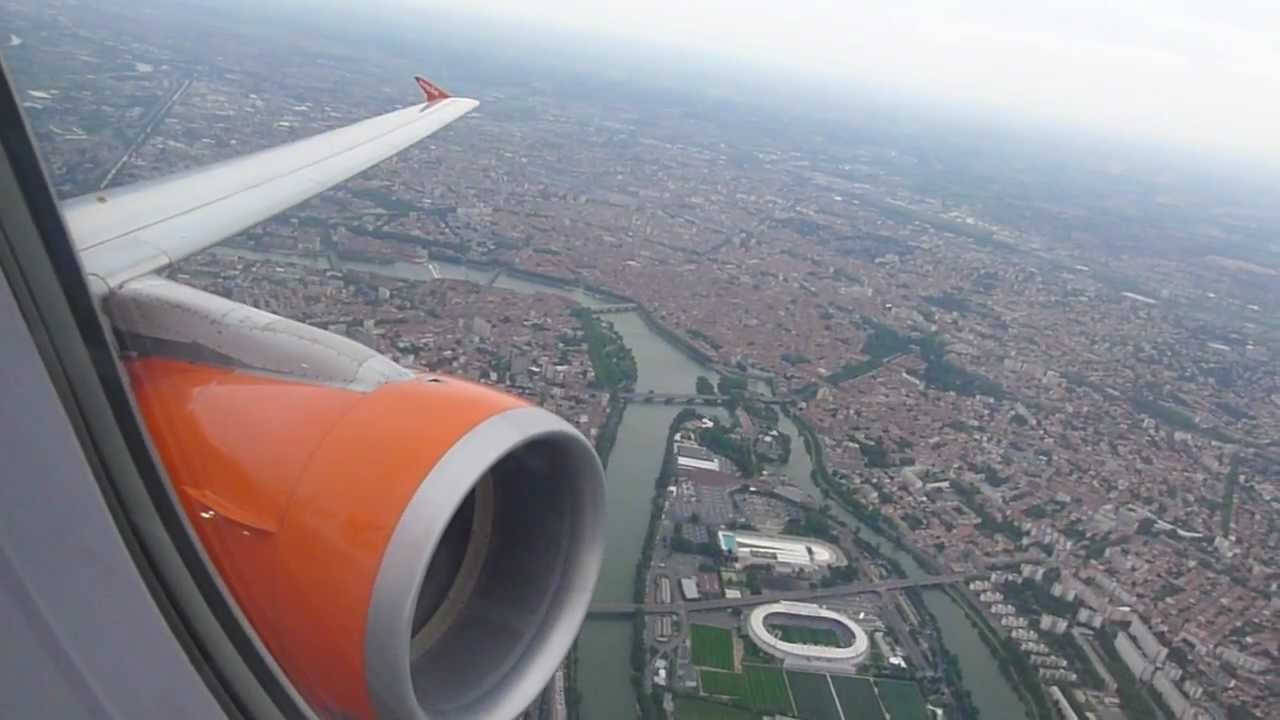
Pilots of an EasyJet Airbus A319 overflew a ridge at less than 500ft after losing awareness of their position while attempting a visual night landing at Bristol earlier this year.
The aircraft was arriving from Glasgow and needed to perform a sharp right turn to line up with Bristol’s runway 27.
But the captain executed the turn prematurely and did not realise that the aircraft was north of the extended centreline and tracking an oblique course to the threshold.
As the jet descended through 1,800ft the first officer told the captain that he believed the aircraft was out of position.
The captain subsequently reassured him that they were on the glidepath. But the first officer noticed ground landmarks – including communication masts – which confirmed the aircraft was north of the centreline.
By this point the captain had halted the descent at 1,200ft, and was also looking for visual reference points, and the first officer instructed him to conduct a go-around. The A319 was 2.75nm from the threshold but still 1nm north of the centreline.
Flight-data recorder information showed that the aircraft was flying at 1,200ft for about 25s, during which the profile of the underlying terrain meant its radar altimeter height reduced from 950ft to a minimum point of 488ft as it crossed a 700ft ridgeline.
The UK Air Accidents Investigation Branch points out that the crew had originally briefed for an approach to runway 09, and that the captain had placed a 5nm range ring – centred on the 09 threshold – on his navigation display.
In its analysis of the 13 May 2015 incident, the AAIB says the captain “probably” did not change this display when accepting a late change to the opposite-direction runway 27 approach. His subsequent use of the display when manoeuvring might have resulted in his unintentionally positioning too close to the runway 27 threshold.
“Both crew members then lost situational awareness but neither communicated this to the other,” says the AAIB.
It states that the crew did not update their brief following the runway change, which meant the first officer was “not fully aware” of the captain’s plan for flying the visual approach and “not properly able” to monitor it.
The AAIB adds that the crew did not set the missed-approach altitude until after the go-around commenced, suggesting the landing checklist had not been satisfactorily completed.
EasyJet carried out its own investigation into the event and made three safety recommendations regarding its procedures, the AAIB says.
Air France was among the leading winners at the Skytrax World Airline Awards, held in London on September 18, 2026, earning multiple distinctions that highlight the excellence of its products and cust...
Embraer delivered the first Praetor 600E to Flexjet, marking the operator as the launch fleet customer for Embraer’s latest-generation super-midsize business jet. The inaugural aircraft joins Fl...
KlasJet has achieved a significant milestone by obtaining Part 129 Operations Specifications (OpSpecs) approval from the FAA, paving the way for the company's expansion into the U.S. market. As pa...
Embraer and Japan Airlines have strengthened their long-standing collaboration through a new multi-year agreement under Embraer’s Pool Program, ensuring continued maintenance, repair, and spare-...