


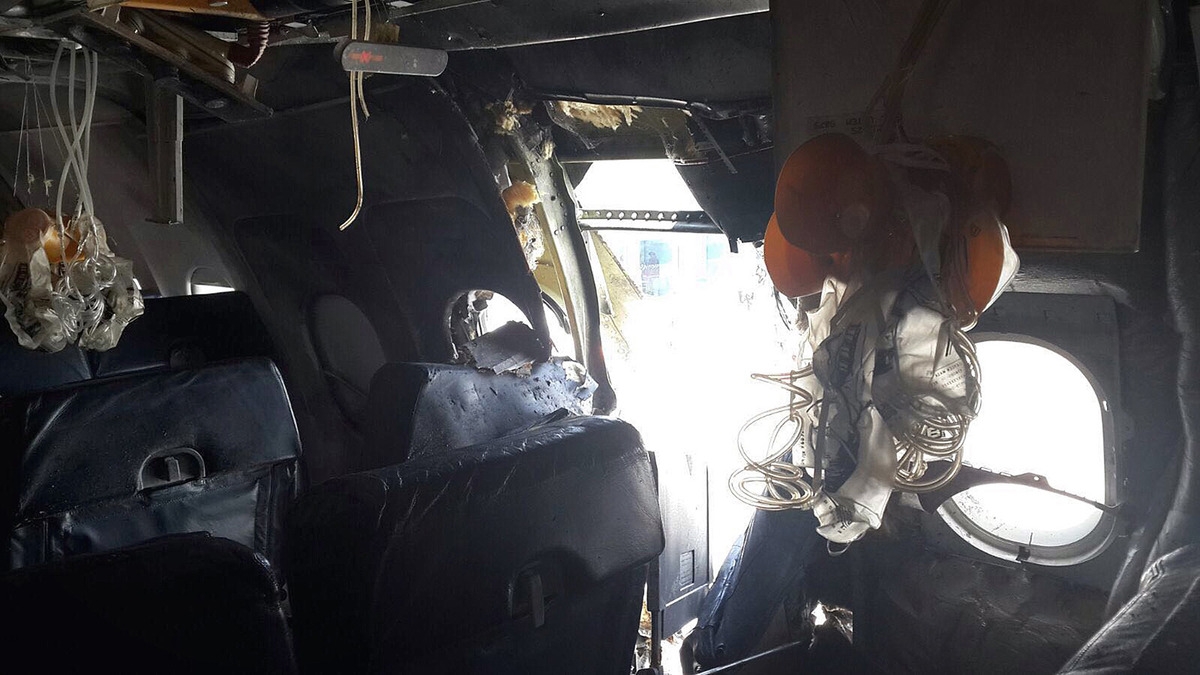
A suspected suicide bomber who blew a hole in the fuselage of a Daallo Airlines plane last week and forced it to make an emergency landing in Mogadishu was meant to be on a Turkish Airlines flight, the Daallo chief executive said on Monday.
The bomber was sucked out of the plane through the 1-meter-wide hole when the blast ripped open the pressurized cabin in mid-air, officials said. The pilot landed the plane in the Somali capital, from where it had taken off.
No group has so far taken responsibility for the attack, but a US government source last week said the United States thought the Islamist militant group al Shabaab, which is aligned to Al Qaeda, was responsible for the blast.
Mohamed Yassin, Daallo Airlines' CEO, said most of the passengers who were on the bombed flight were scheduled to fly with Turkish Airlines but were ferried to Djibouti by one of his planes after the Turkish carrier canceled its flight, citing bad weather.
"That particular passenger (who was behind the blast) boarded the aircraft on a Turkish Airlines boarding pass and was on the list for the Turkish Airlines manifest," Yassin told Reuters by telephone from Dubai.
Yassin said Daallo picked up the 70 stranded Turkish Airlines passengers, including the bomber, to fly them to Djibouti. In total, the flight had 74 passengers.
Turkish Airlines did not immediately respond to a request for comment.
flydubai has strengthened its pilot development strategy through new partnerships with Egnatia Aviation and Skyborne Airline Academy, aimed at expanding the airline's training capacity and support...
Confidence in Asia's business aviation market is on the rise, according to new research commissioned by Airbus Corporate Jets (ACJ). Industry experts expect demand for business aircraft to grow st...
The Fuerza Aérea Mexicana has announced the acquisition of a second Lockheed Martin C-130J-30 Super Hercules tactical airlifter, further strengthening Mexico's position...
Aviation evolves through moments of clarity — moments when industry leaders step forward to explain not only what is happening, but why it matters. This conversation with Evgeny Shadov, VP ...