


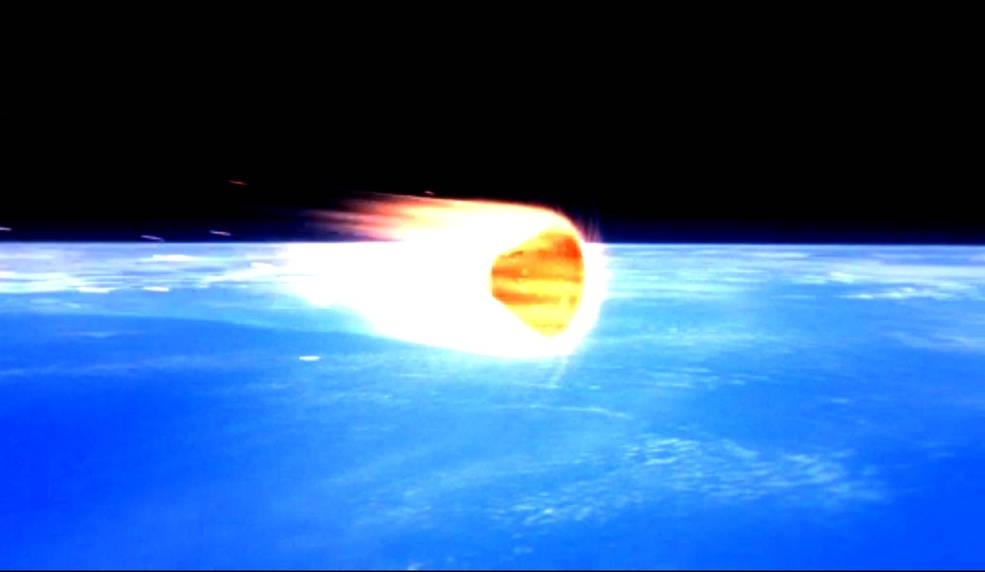
Sending satellites, spacecraft and humans into space is an expensive business. If humanity wants to venture further across the Solar System, we need ways of reducing the cost. Perhaps the easiest way to do this is to make the vehicles we use to launch missions into space reusable.
Michael Smart, chair of hypersonic propulsion at the University of Queensland, believes hypersonic planes are the solution. He spent 10 years designing hypersonic engines called scramjets for Nasa before establishing his own research group, which now works with the Australian Department of Defence, Science and Technology and the US Air Force.
Instead of carrying heavy tanks filled with oxygen into orbit like rockets, scramjets only need to carry fuel, making them more efficient, Smart explains in the video above for BBC Future at the World-Changing Ideas Summit in Queensland, Australia in November. As they work like planes, they can be landed safely and reused in the future.
Smart’s vision, which his team have called Spartan, would use scramjet-powered aircraft – capable of reaching speeds of up to Mach 15 (11,509mph) – to carry spacecraft 35km (22 miles) into the atmosphere. From here a final rocket stage could take over to carry the spacecraft the rest of the way into orbit. This system would be 85% reusable. Hear Smart explain more about what he describes as the “next big leap in propulsion” in the video above.
New Caledonia's flagship carrier, Aircalin, has selected Airbus Flight Hour Services (FHS) to support its incoming fleet of Airbus A350-900 aircraft. The airline currently has two o...
Embraer and Japan Airlines have strengthened their long-standing collaboration through a new multi-year agreement under Embraer’s Pool Program, ensuring continued maintenance, repair, and spare-...
Riga Airport is taking the next step in the development of RIX Airport City by launching, on 22 September, the qualification stage of an international competitive dialogue to select a development part...
The year of the P.180 Avanti’s 40th anniversary has brought a second reason for celebration at Piaggio Aerospace: the sale of more than 40 P.180 Avanti EVO aircraft since the model entered servi...